Gamer+ Galleries - Delta Boogie - G+DBN Mastodon - Network With Hairy Larry
Hairy Larry's Blog - Delta Boogie Network-Gamer+
Home - Table Of Contents - Most Recent - RSS
Search:
Gamerplus DBN News-2026-02
Posted on 2026-02-05
Delta Boogie Newsletter-Gamerplus News - February 2026 - Online Activities

The hairylarryland Discord server and aNONradio host Gamer+DBN (Gamer+ and the Delta Boogie Network) activites.

Gamer+DBN is a Mastodon server at https://gamerplus.org

If you're not on Mastodon already please join.

Every Friday at 2:00 PM Central (3:00 DST) DJ Hairy Larry chats with other anonradio DJs and music fans while we listen to Something Blue on aNONradio. Join the chat with a free SDF account. Before Something Blue enjoy Dubious Goals Committee with tob which streams every day.

On the first Saturday of the month we have Inspired Unreality open game chat or If You Play You Win actual play starting at 10:00 AM Central.

That will be this Saturday, February 7, at 10:00 AM Central.

Every Saturday night at 10:00 PM Central, when I am available, I livestream Something Blue on Gamer+DBN, the hairylarryland Discord server, and Daily Kos.

Every Monday at 2:00 PM Central (3:00 DST) DJ Hairy Larry plays Creative Commons Jazz on anonradio. I chat when I can. Before Creative Commons Jazz enjoy Dubious Goals Committee with tob which streams every day.

Every Tuesday at 6:00 PM Central (7:00 DST) enjoy The Lispy Gopher Climate Show featuring screwlisp on aNONradio preceded by Praise Then Darkness, a music show with northernlights.

You are invited.

Gamer+DBN Mastodon server
https://gamerplus.org

HairyLarryLand Discord Invite Link
https://discord.gg/hpjz9DwNd5

aNONradio
https://anonradio.net

SDF
https://sdf.org/

The Daily Kos link is different every week so I will post it on Gamer+DBN and Discord

Do you want to run a game? Are you a game developer? Do you have music to share? Your originals or your favorites. We're interested.

On the hairylarrland discord server I have added areas called music-drop and game-jam. This is your place to share with us.

Please share this link.

https://home.gamerplus.org/permalink.php?fname=Gamerplus_DBN_News-2026-02.txt

Thanks,
Hairy Larry
hairylarry@gmail.com
https://gamerplus.org/@hairylarry - Gamer+ on Mastodon
https://deltaboogie.net/ - Network With Hairy Larry

Here's your HairyLarryLand Discord invitation.
https://discord.gg/hpjz9DwNd5


Home - Table Of Contents - Most Recent - RSS - Permalink - Text
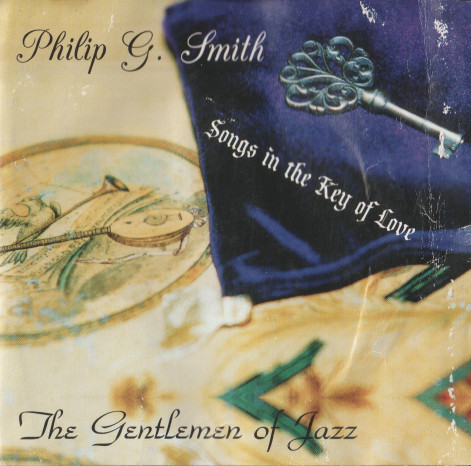
Fringe Review-The Terran Trade Authority Roleplaying Game
Posted on 2026-02-03

Fringe Review: The Terran Trade Authority Roleplaying Game from ZDL's blog
This one is a weird one folks, so strap in and get ready.

Today's game is The Terran Trade Authority Roleplaying Game (henceforth TTARPG – and yes there's a reason why I'm using such a clunky initialization) released by Canada's Morrigan Press in 2006. It's a science fiction RPG that …

Let's roll back the history a bit, because this is really unusual.

History


In 1978, Hamlyn Publishing released a book called Spacecraft 2000-2100 AD by Stewart Cowley. It was a large, hardback art book filled to the brim with science fiction artwork of spaceships, planetscapes, and future cities/bases that were rendered by some of the greatest SF artists of the time: Angus McKie, Gerard Thomas, Chris Foss, Peter Elson, and others represented by J.S. Artists.

More than an art book, however, it was also a detailed future history with little vignettes of space battles, a future history, etc. all paired with pictures showing the subject. It was a brilliant concept that was well executed, leading to more books in the series authored by Cowley—Great Space Battles (1979, with Charles Herridge), SpaceWreck: Ghostships and Derelicts of Space (1979), Starliners: Commercial Travel in 2200 AD (1980).

All of these books were tied together in a future history involving the name of the Terran Trade Authority (TTA) hence the name of the RPG.


Translations and repackagings aside, that was the end of the TTA. Other books in a familiar-looking setting were produced, but not explicitly tied to the TTA setting and, frankly, they weren't, for the most part, as nicely produced.

And then everything went silent.

Silent, that is, until 2006. Morrigan Press, after its release of the 5th Edition of Talislanta, started work on an ambitious project to republish the entire TTA catalogue. Since the original artworks had long since reverted copyright back to their artists there was no way to republish the books in their entirety, so the plan was to use CGI to recreate the feel of the setting for an RPG. The first publication in this project was Spacecraft 2100 to 2200 AD which put the setting forward a hundred years with 3D illustration by Adrian Mann and writing by K. Scott Agnew, Jeff Lilly, and Steward Cowley providing consultation. It was a rushed product full of errors, both typographical and grammatical, that received lukewarm reactions, but they persisted and published TTARPG in late 2006. (Sadly the Local Space: 2200 AD guide book was never published because Morrigan Press was hit by financial difficulties that ended all of their publishing projects.)


And as for the reaction to the RPG, this review is part of it.


The Basics


I am reviewing the PDF edition of the game, having only ever once seen the physical edition, which is probably good given that it's a 400+ page book (rather like later editions of Talislanta … this is foreshadowing). It has a full-colour cover illustrated in the 3D CGI style of the 2006 TTA book, designed to look like the '70s-era space art that inspired the original book and, to be fair to it, the unnatural smoothness aside, it does have the right feel.

Internally the book has single-column text in a readable font with a bit of a distracting grey-scale art pattern on the edge. (Something about it just attracts my eyes away from the text which is kind of a bad idea.) It has a decent table of contents for quick navigation at the beginning and a *sigh* "index" at the back which is really spartan.

Unfortunately that table of contents highlights in stark relief one of the major flaws of this game.

Information dump


There are 417 pages in this book. Starting on page 5 and ending on page 93 is a huge information dump about the setting: future history, locations, the titular Terran Trade Agency, etc. Almost a quarter of the book, right at the front, is devoted to setting information. Page after endless page there is droning text about wars, places, organizations (but, tellingly, not people!) which really starts dragging. Unlike the books the game is based on, this future history is not paired with colourful illustrations that attract the eye. There are some, but nowhere near enough given the sheer volume of information. The result is intense tedium. I had to re-read it for this review and it almost dissuaded me from doing it.

And that's only just the start!

Game System


The game rules start on page 94, ostensibly. They drone on endlessly as well, introducing a simple game system in the most tedious and dull fashion imaginable. The game is termed the "Omni System" but anybody who's ever followed Talislanta will recognize the system instantly. Let's see if this rings any bell: 0-centric attributes, d20 rolls, modify for skills and situation, read the results on a table with 0 or less being a mishap, 1-5 being a failure, 6-10 being a partial success, 11-19 a success, and 20 or more a critical success.


Characters are defined by the attributes Intelligence, Will, Strength, Constitution, Perception, Charisma, Dexterity, and Speed rated generally in the -5 to +5 range. (Ringing any bells, Talislanta fans?) There are secondary (calculated) attributes called Combat Rating, Ranged Combat Rating, Psi Rating, Piety, Renown, and Hit Points. (Again, players of Talislanta will recognize many of those either directly or by an echo.)

The game system is simple. I've already outlined everything important above. Specifics involve minor procedural lists that can be summarized in a single page and explained in perhaps three. For sake of more completeness, naturally, in case someone picks up the game who's never played an RPG before, this would have to be expanded, but these rules are 40 pages long for this basic game. Then there's 15 pages for the psionics system that isn't even used in the setting (!). Then there's an additional 34 pages of skills and quirks.

(Have you noticed yet what's missing?)


Information dump (reprise)


Then, finally, we hit character generation. On page 183 you finally get to learn how you actually make a character for this game. You've been fed almost 200 pages of dry text, barely broken up by small amounts of illustration, none of it of any real interest because you still don't have an avatar for this setting. Finally, on page 183, you get to start making a chara…

Oh for…! GOD DAMMIT!

See, to make a character you need to pick one of the races: Alphans, Proximans, and Terrans. (The latter is human, in case that wasn't obvious.) 30 pages of information are dumped about the Alphans. Then there is 30 pages devoted to the Proximans. Finally there is 18 pages devoted to humans.

This game thinks you need 18 pages to explain humans to … well … humans. This is verging on actual insanity.

There is less than one page of information in those info dumps that actually involve making the damned character! There's more than that devoted to the Alphan language alone (3 pages)! You have another nearly 80 pages of info dump to go through just to get the roughly page and a half of actual information you need to make your character.

Rant mode on


And this is in the section actually entitled Character Creation! This is one of the worst pieces of information design I have ever seen! The most frustrating part of it is that none of this is bad. This is good stuff! This is the kind of thing I like to see in games that have rich, colourful settings. Games like Talislanta, Jorune, Tekumel, and others in that vein. But I should not have to go through 264 pages of this before I can even start thinking about what my character's past and personality are like! Were this game organized sanely it could very well be one of my favourites, but the way it is written and edited I'm just incredibly frustrated every time I look at it. There is a reason it is a fringe game, and it's not only because of Morrigan Press' financial difficulties!

Deep breath…


OK, that's out of my system. Again, anybody who's played specifically Talislanta's 5th edition will recognize what comes next. Species selected, the next step is "paths". Paths form the complete life history of your character and together build up a character's stats and skills in ways that can make each character unique. This solves one of the problems I had with earlier editions of Talislanta, in fact, where two characters from the same race were basically the same. The 5th edition fixed that and this game continues in that vein.

There are paths for regions of birth, family background, careers, and personalities. Paths result in adjustments to attributes, skill ranks, quirks, starting gear, and other such things. Some paths have pre-requisites (either in attributes/skills or in previous paths). An example path makes this clearer: Asteroid Miners must be Terran or Proximan; get +2 to Strength and +1 to Constitution; get 12 skill ranks to be distributed into preferred skills like Climb, Computers, Demolitions, Profession (miner), etc. (it should be noted that skills can be taken outside of these preferred ones, but they're more expensive); allow quirks to be chosen from ones like Alcohol Tolerance, Good Balance, Windfall, or Zero-G Training;j and give starting gear like a berth aboard a mining station/installation, mining tools, a canteen; and 500 credits of cash. (The lists given are not exhaustive, only illustrative!)

Interestingly, this is where information design is done well. Each path takes up about 2/3 of a page. After the title, each path is given a paragraph to explain what the path entails, then a well-structured list of what the path entails. This is the kind of information design the entire game needed, but sadly didn't get.

(Wouldn't it have been nice to know these numbers and how they're made before having the game system exhaustively explained to me? Nothing quite beats having a character sitting there with hard numbers to plug into game systems when learning them…)

Sundries

And then we're back in the info dump. Starting on page 283 and going on to page 327 we have equipment. Pages 328 to 375 are spacecraft rules and stats. If you're expecting another rant about information dumps, look elsewhere. This is properly designed.

First, this is the right part of the book to put this kind of information. Characters are made and game systems are explained. The equipment that's used by characters in game systems should be placed here. For the first time this game got things in the right order.


Second, as with the paths, this is well-designed. It's organized by kind, and into small bites of information. There's no three dense pages of information on irrelevancies like the linguistics of a fictitious alien race. There's short pieces of information on individual kit (often with illustrations of it!) that's written in a style that's both accessible and digestible. There is a whole lot of it, but none of it feels like fat that needs trimming (unlike, say, about half of the "game system" chapter) and none of it feels like a tedious, droning essay about stuff that might have added colour if written with colour in mind.

Kudos where they belong. The equipment section is tight.

Spacecraft


This threatened at first to return to the info dump state, opening with an explanation of the "DeVass Generator" and "Alcubierre Drives" and such, but mercifully that ends after a few short pages and the actual game system begins.

Many SF games have vehicle rules that read like wargames rules, but mercifully this game remembers that it is a role-playing game, not a starship combat simulator and gives fairly simple, punchy (albeit somewhat cinematic) rules for vehicular mayhem.

The rules end off with actual stats for various vehicles, again in a style that is bite-sized and well-organized, often with illustrations which, bonus!, are very clearly taken from the actual TTA books (albeit as 3D CGI versions of them).

It's not quite as tightly written as the paths section or the equipment section, but this part of the book is still something that didn't give me the urge to pull out my eyeballs or fall asleep. It's pretty OK RPG writing, and the rules themselves are actually pretty nice RPG rules for vehicles.

GM guidance


The remaining 35 or so pages of the book are GMing advice. Most of it is pretty generic (e.g. "… Take it slowly at first, and don't be too concerned if you or your players make mistakes…"), but some of the advice for interpreting the "Omni Table" results is actually very sound. (e.g. "… Don't forget the environment …" This is good advice for explaining reasons for unexpected failures or successes that many GMs overlook.) There's guidance for how to alter the rules to suit the style of campaign you want to run, how to run epic or local scale campaigns, and a decent template for designing adventures that would be helpful for new GMs and easy to use as a baseline for more experienced ones.

But then…

More game systems. Rules for the environment. Interstellar hazards. Gravity. Diseases and other afflictions. This is a simple game system whose chapter on it is already bloated (c.f. above) and yet none of this was in it. Why? Why is this not in with the main rules and perhaps written in a tighter way so you don't have so many damned pages devoted to small riffs on the same core idea?! This is beginning to read like D&D3!

Then after this odd interjection of game system rules there's discussion of star systems and their role in campaigns, how to handle "the unknown" (with some very good advice here, along with a nice example!), and a section on creatures and creature encounters. The rules then end rather abruptly and go straight into the OGL and the (as mentioned before) inadequate index. A set of advertisements (including for one product never released) rounds out the text.

The Goethe thing

So the three questions:

What was the game trying to accomplish? That's easy. It was intending to be a role-playing game for playing out adventures in a popular set of sadly long-since-unpublished books of SF art with an intriguing background. The people who wrote the game had an obvious love for the setting to the point that they went through a lot of trouble to get the rights for this (the full history of this is a lot more convoluted than what I outlined above) and it's to their credit they got to the point they did.

Did they accomplish this end? Ugh. This is a complex one. I think that the game system they used (a very lightly altered Talislanta 5th edition) is a good system, and the adaptations they made to have it fit a science fiction setting worked well. In that regard the game is a success. But the game delivery is terrible. Which leads us to the third question.

Was this worth accomplishing.

As-is, I'm going to go with "no". While the raw ingredients for a good game are there, and indeed often so frustratingly close that it makes me want to scream, in the end the poor information design and the poor rules organization leaves me cold. I really want to like this game. I love the TTA setting. I have always liked the Talislanta game system, and the 5th edition expansion of character generation to make characters more distinct is my favourite edition of the game. (I know this makes me dead to many fans of that game, but I don't care.) Frustratingly the information content, too, is very good and exactly what I usually look for in games that have evocative settings.

But…

I just can't stomach the way this book is written. You go almost half the length of the book before you even start making a character. Information is organized in a way that is backwards and inside-out. There's obsessive and lengthy attention paid to things that are irrelevancies (like linguistics for a species) all burying the lede of information you need to actually play the game. Where you get information to play the game it's bloated, it's split up into odd partitions, and it's just generally not a joy to consume.

This book is something you can use as raw material for a better game, but … personally I'll just use FATE or Mythic and the original books instead of this system.

Which is really a damned shame.


Home - Table Of Contents - Most Recent - RSS - Permalink - Text

Fringe Review-Bloodshadows
Posted on 2026-02-03

Fringe Review: Bloodshadows: Fantasy-Noir Roleplaying from ZDL's blog

Full disclosure: I was given this game for free by its publisher. This was not done for purposes of review (more out of pity!), but it would not be honest to fail to mention this potential bias.


I have a somewhat complicated relationship with Bloodshadows. I originally encountered it when it was a West End Games setting for their Masterbook game (itself part of the '90s trend of turning every house game system—in this case the game system behind Torg and Shatterzone—into a generic game). The thing is that while I admired several features of Masterbook, at it core I found it a pretty fundamentally flawed game that I didn't want to play very much. Which was a pity because the Bloodshadows setting I adored straight out of the box.


So here we are, over two decades later, and I find myself with a Bloodshadows game in my hand from the home where all the great, undervalued games go for continued unlife: Precis Intermedia (rapidly becoming my favourite currently-active publisher of RPGs).


History


First published as a setting book for Masterbook (as mentioned above) in 1994, Bloodshadows was an intriguing blend of setting elements whose actual genre was hard to pin down beyond "horror/fantasy/pulp/noir". It was the first world in the line, and the only one based on an property original to Masterbook rather than being licenced. (The other properties were properties such as Indiana Jones, Necroscope, Species, Tank Girl, etc. etc. etc., many of which didn't get a lot of support beyond their one world book and were of very dubious benefit.)


Masterbook as a system was not, however, very popular when compared to WEG's other major system: their D6 system derived from the first (and still best!) Star Wars RPG (itself derived from the Ghostbusters RPG). D6 was a beast of a system, economically speaking, and it made sense at the time to rewrite Bloodshadows for that system. Unfortunately this roughly coincided with the shoe selling difficulties that killed WEG, leading Bloodshadows out in the cold, systemwise. 2004 was the end of Bloodshadows … or so it seemed.


Precis Intermedia, however, had other ideas. They acquired the rights to the game and setting (as well as to Masterbook) and published an interim release while they patiently reworked the rules into their in-house Genre Diversion 3rd Edition rules system. Thus, in 2016, 22 years after Masterbook landed with its first setting, Bloodshadows: Fantasy-Noir Roleplaying was released. It is this edition, specifically its PDF edition, which I will be reviewing.


The Basics


Bloodshadows is a beefy 259 page PDF. Its striking cover lets you know from the start what you're in for, with the '40s-era garb, the very noirish detective and his two female companions, the guns, the magic spell showing in one of the companions' hand, and the ghostly shadows haunting the edges of the picture set in a dark, moody hall. Of interest in this third edition is that the cover is far more equitable. Two of the characters in it (the square-jawed detective and the vamp in a slinky black dress) have been in all of the game's editions' covers, but in this one the vamp has a gun out and is an active participant in the scene being played out whereas earlier editions had her helplessly clinging to the hero while the hero bravely stood off evil. (Bleah!) The addition of the non-vamp "Girl Friday" spell caster further adds to the appeal of the cover to me. Mr. Bernstein has a good eye for keeping up with the times, I feel.


Internal art consists of moody black-and-white full-page pictures at the head of each chapter—several of them riffing in interesting ways on classic works like the most-parodied painting of all time: the diner scene—which tend to vary between "competent" and "stunning" while little inline illustrations here and there are black and white line drawings ranging in calibre from "meh" to "pretty decent". None of the art comes across as randomly selected filler. Even when what's in the picture doesn't illustrate what's in the text around it, it does quite a good job of setting the mood. The art director deserved whatever money he got. And likely more, given the state of game publishing.


Internally the rules are competently typeset and laid out. There is a background, and the background, faint as it is, could prove distracting to people, especially those who have vision problems, but thankfully there is, on the landing page, a big button to press that can turn off the background for those who just want the text and pictures. The fonts of section headings are … well, honestly I'm not a huge fan. I can see they were selected for their feel, but I find them a bit ugly. Thankfully the important fonts (actual body text) are nicely readable serif fonts.


The book opens with the once-inevitable fiction piece that was used to establish genre and tone in so many books. Usually I hate these: the writing is most commonly amateurish and it whiffs of page count filling. I don't hate this one. I don't like it much, but it doesn't feel wasteful. The game setting and genre is just weird enough that this fiction, as lacklustre as it may be, does a good job of illustrating some of the key concepts and moods of the game. In succession after this is a chapter on the world, a chapter on character generation, on basic rules, combat rules, equipment, magic, GMing (known in this game as "directing"), "unnaturals" (the monsters of the setting…many of which are also available as PCs), one of the major cities of the setting, and some adventures (called "stories"). An appendix rounds out the book with sample characters, reference sheets, and character sheet blanks. (Of course there's tasteful advertisement for Precis Media's other products as well.)


Of course the publication is not perfect. (Very few are.) The whopping huge missing element here, however, is the index. There isn't one. This could be considered laudable in that a bad index is just a waste of pages, but I'd much rather have seen a good index. Tragically, good indexing is hard work and game publishers usually lack the margins required to spend the money to get good indexing done.


The System


The name of the game system is formally "Genre Diversion 3rd Edition" which is one iteration past the "Genre Diversion i" rules set previously published by Precis Intermedia (if I have that ordering right). It appears, too, that the goal of the design was to make the game at least roughly compatible with Precis Intermedia's Active Exploits diceless game; there's a page on using AE with Bloodshadows that is so trivial it almost (but not quite) doesn't need to be in the book.


Characters


Characters in the game are defined by five "abilities", ranked 0-5: Fitness, Awareness, Creativity, Reasoning, and Influence. 0 is considered a disability, 2-3 is average, anything over 5 is "unimaginable" (and not available to normal human beings). A sidebar notes that the perceived paucity of abilities is a vestige of the deeply-entrenched war game roots of RPGs, but that mechanisms like "ability gimmicks" can be used to replicate that for those who wish that level of detail while keeping the game smooth and simple


In addition, characters are defined by "pursuits" (what other games might call "skills"), rated from -1 to +4 with 0 being "basic knowledge" and +4 being "grand-mastery". All characters have basic knowledge (0) in all pursuits that are not flagged as "academic pursuits". Those default to "incompetent" (-1). Pursuits are generally paired with specific abilities, but, for example, firing a gun from the hip, usually a "fitness" task, could be based on "awareness" instead while "reasoning" could be used to time a punch in a way that slips past defences. This is a refreshingly improvisational approach that I've always enjoyed in games that permitted it.


Gimmicks are the next piece of character definition and these are aspects of characters defined by background, physical oddities, personality, and other traits not covered by abilities and pursuits. Physical gimmicks might be things like "appearance" which gives a bonus (or penalty!) to influence in matters involving pure attractiveness. Cultural gimmicks could be something like "authority (police)" that provide special social powers over and above those of a normal citizen. Special gimmicks could be something like "aversion(holy water)" (not all gimmicks are good, recall).


Alignment is a thing in Bloodshadows, but it is a thing closely tied to the setting so it will be discussed in that part of the review. Also a thing in the game is species (refreshingly called that accurate term for a change instead of the cringe-worthy "race"). There are a lot of species. Just the general classifications of them are: pure races (of which only humans are commonly known), breeds, demons, shifters, undead, and wilderness creatures (these latter not available as PCs). Sixteen player species are provided and several more wilderness creatures are detailed in the GM's section.


Every character also has a role, something like a character class (or, for those familiar, more like a D6 template). Ten roles are provided, plus an eleventh that can be used as the basis for characters which don't fit the other categories. Each role (like "spellslinger") is given a set of required pursuits, recommended pursuits, mandatory gimmicks, and free equipment.


To the designer's credit (Brett M. Bernstein), the creation of a character is simple process. I'd only have one small suggestion to make for future reference: put the character generation reference sheet at the beginning of the chapter and then order the information in the same sequence as people are going to use it. There was a lot of reading here without a framework to hang it off of until, well, it had all been read. Making a character is simple, but it didn't feel that way at first.


Basic rules


The core game mechanism of Bloodshadows is a simple task roll system modified by circumstance to suit. In time-critical scenes (like combat) a "turn" involving one die roll is roughly five seconds long, but in more abstract circumstances, a die roll could represent other measures. One ability is used in conjunction with one pursuit (c.f. above for these). The ability is usually, but not always, the primary ability of the pursuit but can be altered by circumstance. The example the text gives is that firing a gun is Fitness, but repairing it could be Reasoning-based instead, using the Firearms pursuit in both cases. Degrees of difficulty range from "Trivial" through "Impossible" with target numbers attached. A "routine" task is 10 difficulty, for example, while a "challenging" one is 14. Situational modifiers tend to modify the difficulty. Tasks are rolled with 2d6 summed, adding the governing ability and pursuit, and if this equals or exceeds the target number from difficulty the task succeeds. "Overkill" is the difference between the roll and the target and can be positive (success) or negative (failure). This overkill number is used in some systems, most notably contested tasks and exploits. Double-6 and double-1 are triumphs and calamities respectively and act like critical successes and failures.


The game system offers various modifications like over-exertion, exchanging fatigue/tension for success, automatic tasks for eliminating unnecessary rolls, contested tasks for when to opponents directly apply skills against each other, passive tasks for unconscious or reflexive applications of ability, united tasks for joint action, investigation tasks, composure tasks, reaction tasks, connection tasks, … well, the list goes on. Each takes the basic mechanism and is more a guideline on how to interpret results and what difficulty modifiers might exist rather than new rules.


Exploits, however, are of interest, in that if a task results in 5 or more overkills, special effects can come into play. Characters can choose from a variety of effects based on what kind of task they were performing, like reducing difficulty of tasks for allies, completing tasks more quickly, etc.


Experience, like many games of the original Bloodshadow's era, is a combination of a character growth mechanism and a "fate point"-style mechanism that can be used to assist in-game actions.

Combat


Combat, as mentioned before, is done in turns of approximately five seconds. Movement is measured in "spaces" which are pretty abstract and can be viewed as two yards or metres (since they're roughly equivalent) at need. In general characters can do one task per turn, though attempting multiple tasks is possible at a stiff, increasing penalty. Only one task roll is made, however, no matter how many tasks are attempted, if the tasks are the same action on different targets. That little quirk aside, the combat system is pretty standard for a game of the original publication's era: attention is paid in moderate detail to movement, positioning, ranges, and environment. It's not at wargame levels of detail, but it certainly is also not a so-called "story game". As mentioned before, the core mechanism never really changes. It only gets its application clarified. It looks like a lot of rules, but it's pretty much common sense application of a single core idea.


One thing the game gets definitely right is putting social combat on the same footing as physical. This is far more satisfying than the more typical approach of having detailed, wargaming rules for physical conflict but hand-waving single-roll rules for complex social situations.


The damage system is pretty interesting, and, notably, covers not just physical damage but psychosocial and simple madness. Character health is marked by "marks", "lines", and "grades" of damage in the form of "fatigue", "injury", "tension" and "mania". Marks are checkboxes, arranged into lines of different lengths based on abilities. When a line is marked off, the damage effects move up a grade. So damage is taken by marks which, each time a line is filled off, increases the impact of damage by a grade. When damage is taken, too, it may be abated by appropriate protection (padding, armour, will, ego respectively). For each mark, a die is rolled, and if that die is less than or equal to the protective value, it's considered to have not pierced the protection. So, for example, if 3 marks of injury damage was caused to a character wearing bones/hide armour (protection 1) and 3d6 rolled 2 1 5, only two points would penetrate, the 1 result being absorbed by the armour. Not all damage can be abated, it should be noted: some is "absolute" and is just directly applied.

Magic


Ah yes, magic. The game's setting, Marl, is high-magic, and in it magic and spells are on the same order of expectation as we expect electricity. Everybody knows a little magic. Magic is arranged in nine "schools" (chronomancy, elementalism, necromancy, photomancy, somniomancy, sorcery, technomancy, vitomancy, and wizardry). Casting spells is a straightforward application of tasks, only the casting pursuit is combined with an ability determined by a theory (alteration, apportation, conjuration, divination, and invocation) pursuit that was used to create the spell. Difficulty ratings are by spell, and effects involve ranges and durations and other such usual affairs. United tasks can be used to form rituals, and there may be special requirements in spells like special components or gestures or such. Spells can cause feedback on failure which can have bad effects on characters.


A wide variety of "established" spells are provided and a full system for creating new spells is presented in eight pages of fairly dense rules requiring a worksheet to get through. In truth the magic system is the most complicated part of Bloodshadows, though against the standards of games like Chivalry & Sorcery (1st or 2nd edition) it's not that bad. It is most definitely not "rules-light" however.


The Setting


Which brings us, now that we know how characters are defined and how they interact, to the setting: the world of Marl (and specifically the continent of Eln). Marl is a high-magic world full of monsters that has survived a "Godwar" between the cults of the gods of Order and of the gods of Chaos. Civil wars flooded through empires in a fight for minds and souls and in the aftermath of the death spasms of empires the Others came, with humans now fighting against (and alongside) horrors like the undead or shapeshifters or their ilk. Civilization fell back to fortified towns and cities and the wilderness was left to the kind of unnatural ilk that made the unnaturals that lived together with humans now look positively normal. The heart of the setting is now its cities and the lands in their immediate vicinity feeding them. Cities are tenuously linked by couriers and even more tenuously by trade. Teleportation and telepathy are used to travel and communicate with overland travel almost unheard of over any distance.


And the Godwar is coming back, this time fighting in the board rooms and the alleys, not in battlefields. Alignment, as mentioned before, is a thing, in that characters can be affiliated with the sides of the Godwar (Order or Chaos) if they choose, or they can instead be a part of so-called Oathbreakers, factions which have abandoned one side or the other and which live in uneasy alliance against them. (Or, naturally, characters can be unaligned.) The second Godwar is intended to drive some of the action in a campaign but designed in a way as to be background colour or front-and-centre in an individual GM's game.


The horror notes of Marl are obvious, given the denizens of the world, as are the noir notes, given the cynical, hardbitten nature of the setting. Less obvious, but present, are the more straightforward urban fantasy notes and, concealed within the game's very mechanics, the adventure pulp notes, though more in the direction of detective pulps than pulp sci-fi.


Goethe's Ghost


This is the part where I answer Goethe's three famous questions:


1. What was the designer trying to accomplish?

2. Did the designer accomplish it?

3. Was it worth accomplishing?


What the original designer of Bloodshadows was trying to accomplish was to create a compelling setting for Masterbook. What the current designer of the 3rd edition was trying to accomplish was to make a game that had the feeling of the original while being more modular, compatible with other games in the ever-expanding Precis Intermedia lineup, and being substantially simpler. As far as I'm concerned both succeeded at their respective tasks.


Bloodshadows has always been a setting that intrigued me, but Masterbook as a game, especially with the original Bloodshadows world book, was too deeply flawed for me to ever turn that intrigue into actual play. (I find that Masterbook is a game of ludicrous extremes like a campy sci-fi serial … while being like a wargame in the sheer variety and volume of rules.) With this new third edition, I am actively looking for people to try it out. The rules are now manageable for my poor, simple little brain (and compatible with Active Exploits at very little effort, for my diceless needs in online chat settings).


So was the work worth it?


I'll put this at a "yes" but with some qualifications. Before I encountered FATE or other such games my "yes" would be completely unqualified. Now, though, although I am actively seeking players of the game, in the back of my mind I'm also thinking that it would be pretty easy to take the interesting concepts and setting of Bloodshadows and simply play it with FATE. Personally I like this game and would like it even if I had had to pay for it. I could see, however, an argument for using it mostly as source for a more story-oriented game.


That being said, Precis Intermedia sells this at a nice price point, so even if all you want is the setting, the game is certainly more than worth a purchase.


Home - Table Of Contents - Most Recent - RSS - Permalink - Text

Fringe Review-Superhero-44
Posted on 2026-02-02

ZDL
Fringe Review: Superhero:44
No, the name is not a typo. Superhero:44 is the name of a game so rare that most people who know of it know of it as Superhero:2044 from Gamescience.

This is not that game. Or, rather, it is that game. It is that game as it existed before Lou Zocchi published it under the Gamescience umbrella. Published under the subtitle "THE CAMPAIGN OF SUPERPOWERED CRIMEFIGHTERS IN THE YEAR 2044" in 1977, it's an odd duck of a game that's somewhere between a skirmish level wargame and a role-playing game.

It's from humble seeds like these that the hobby grew into what it is nowadays.


Origin Story


Donald Saxman played in a "medieval fantasy campaign" under Mike Ford, an apparently very creative gamer who would have assault guns as often as dragons in his fantasy games, not to mention "over two dozen alternate universes, each with its own natural laws and historical motif". One of those alternate worlds was a world populated by comic and pulp novel heroes. Rules for this latter one were a pastiche of rules adapted willy-nilly from other games since at the time there were no rules specifically for that genre. Saxman, inspired by Ford's campaign, embarked upon a course of making his own set of rules for the superhero genre.


The Book


Superhero:44 is a self-published 48-page booklet printed on plain white paper with a pale brown cover made of light, matte card stock. It is so much a DIY labour of love it hurts: the text is obviously typewritten and pasted into place for reproduction. The art—which is surprisingly good for the era and budget!—is all black-and-white line art which ranges from barely-better-than-doodling to quite impressive set pieces, with more toward the latter. (About one page in three has some kind of art on it.) One nice touch is that each artist is individually credited for each work on each page.


Reproduction of the text is imperfect (to put it politely) and can be a bit of a strain to decode. (The later, expanded, Gamescience publication of this game as Superhero:2044 is much easier to read despite being in smaller text.)

There is a one-page foreword, sixteen pages of background, eight pages of "player setup" rules (character generation and coverage of character planning), six pages of combat rules, eleven pages of "handicapping and patrol" rules (for which q.v.) and four pages of costs and salaries.

The Rules


Being, as it is, a game made by early gamers who still hadn't quite sussed that role-playing games and wargames are different breeds of games, this game has many of the flaws of early games (like the original Dungeons & Dragons, as a matter of fact). Concepts are introduced in an order that seems a little quirky to people who are used to modern game writing, and there is a focus on things which have been deprecated or fallen entirely by the wayside in modern games.

That being said, it also has quite a few innovations which people today might find surprising coming out in 1977. This is, after all, a year before which there were only three published RPGs: Dungeons & Dragons, Metamorphosis Alpha, and Empire of the Petal Throne. In this year Chivalry & Sorcery was first published, as was Traveller. This is when the first book for Advanced Dungeons & Dragons was published, as was the original "blue box" of Dungeons & Dragons. This game predates Runequest and Gamma World! (Which is to say that there is a reason why this game has some oddities when viewed by the modern reader.)

So lets dive in and look at both the innovations and oddities, shall we?

Background


While not really counting as an innovation at this point, it is still unusual that Superhero:44 has a (for the time) detailed setting. Before this only Metamorphosis Alpha had a (very sketchy) setting, and Empire of the Petal Throne had a(n extensive) setting. Many games published after this one, well into the 1980s, had no setting provided, or one that was so sketchy (like Metamorphosis Alpha's) that it made little difference.

The setting for Superhero:44 is Earth in the year (unsurprisingly) 2044 in the fictitious city of Inguria, "the city of the future". This setting is intentionally kept small as an introductory set from which borders a campaign can spring out into a broader world as desired. To cite the author's intent:

Superhero '44 can be played on many levels. The handicapping scenarios can be enjoyed as short games in themselves. With the use of weekly planning sheets and patrol result calculation Superhero ' 44 can be maintained as a campaign over a long period of time. It is also possible to use the combat system to play specially designed scenarios, commando raids, or situations actually taken from comics or novels. In the ultimate form it can be successfully combined with other similar games and inject novelty into other campaigns.


The island (Shanter Island) holding Inguria is located in the west Pacific in the area of Korea. It's "future" history includes an Indian-Australian war and a six-day war in 2006 that's strongly hinted at being nuclear in nature. In 2032 first contact with aliens from "Formalhaut" ...

You know what? This is too much information to pack into a review. Basically Inguria became the centre of "Formian" presence on Earth and also a hub of "uniques" and other crime-fighting (and criminal) types' activities. In a few short pages the background covers history, technology, psychology, economics, politics (both earthly and with the aliens), and geography. It's very densely packed with overview information: quite a shock for a game self-published in 1977!


Player Setup


Characters in Superhero:44 are defined by seven "prime requisites": Vigor, Stamina, Endurance, Mentality, Charisma, Ego, and Dexterity. As a capsual summary, Vigor measures health; Stamina measures ... a lot: "offensive and defensive hand-to-hand righting ability, as well as the ability to run fast, hold one's breath, etc."; Endurance measures resistance to injury from various sources; Mentality covers intelligence and education; Charisma covers looks and strength of personality; Ego is the mental version of Endurance; Dexterity covers speed, reaction time, balance, hand-eye coordination, etc.

Huh. No measurement for strength. What an odd oversight. It probably shows up in the powers or such, right? (Foreshadowing: nope.)

Further, characters are members of one of three groups: Uniques (think Superman or the X-men), Toolmasters (think Batman or Iron Man), and Ubermensch (think Tarzan or, if you squint right, maybe Captain America).

To make a character, first a background has to be written up (!), and a character type selected. Then the prime requisites are done up. By point assignment.

This is, to my knowledge, the very first published RPG with a purely point-assigned character generation system.

There are three steps in assigning points.

1. Each character gets 140 points to distribute over the 7 prime requisites. Each prime requisite must have at least 1 point after all the steps are gone through, but there is no upper limit.
2. Each character type gets modifications to prime requisites. Uniques get +20 Charisma, for example, while an Ubermensch gets +20 to Endurance, Vigor, Stamina, and Dexterity, but -20 to Mentality.
3. At the discretion of the referee, a single, very specific +50 bonus can be given in a limited area. For example a character may be given a +50 bonus to Vigor, but only vs. firearms.

And here, too, not only do we have the innovation of a point-assigned character generation. We have the vestigial beginnings of full-blown advantage and disadvantage systems:

Some powers do not adapt well to this system, and alternate ways of representing abilities are certainly allowed if they can be quantified in some manner and do not unbalance the game. Plus and minus additions on attacks may be given. Characters who accept weaknesses or disabilities (kryptonite, for instance) should be rewarded with extra power.

This is in 1977!

In case this onerous task of coming up with a background and 7 numbers is too much for the player to comprehend, the book helpfully provides three sample characters, one of each type.


Then it ... goes a little weird. It goes straight into the "weekly planning sheet". No introduction of the concept. There's no game system talk yet aside from some tables showing the effect of (some!) prime requisites at various levels. It just jumps from character generation (and prime requisite levels) into:

Each week each character must submit a planning sheet to the referee. This sheet should tell the status of a hero at the beginning of the week. The referee uses this information to calculate how many and what kind of crimes are encountered during the week. He determines the result of each encounter, totals the rewards and bonuses, and notes any lawsuits, injuries, or captures before returning the sheet to the player.

And in the introduction the writer posits this as the default play, recall. The planning sheet (which also doubles as a character sheet) is literally a schedule of when the character works, goes on patrol, changes in pecuniary circumstances, health issues, crime stats and ... well ... everything that in a more modern game would be played out live, not once a week by paperwork. Very odd.

Then, finally, it gets to what we would consider the main body of rules (and entire point of the game!) these days.


Combat


OK, I'm being a little bit sarcastic. Obviously the point of RPGs isn't just combat. It is telling, however, that in most RPGs the rules for combat are long and detailed and the rules for social interactions or other non-combat forms of conflict are sketchy (if present at all) and vague.

This game doesn't have that problem. It has no rules for anything that's not combat, really. Combat is detailed and everything else is basically non-existent except in passing, like a drive-by shooting of rules only using whiffle balls instead of bullets.

So let's deal with what's actually in the rules before we look at what's not there except in very brief passing.

Combat is divided into turns. Each turn has one round for each player or group. In each round, a player (or group) may move twice, attack twice, or move once, then attack once. (Never attack once, then move once.) Attacks are one of four kinds: direct physical attack, transformation (?), mental attack, or projectile attack. Mental and physical attacks are resolved using a universal combat matrix where a 3d6 roll must exceed or equal a target number, but transformation attacks are resolved using their own procedure on their own table.

The rules on initiative and ordering are confusing and contradictory. Each turn has a round for each player or group. Movement is simultaneous, but people with higher dexterity go first. And then the sudden introduction of "phases" in the middle of a sentence changes the nature of the system entirely. Damage is supposed to be applied at the end of all players' rounds, but the phases are such that someone is guaranteed at least one move before they're injured. Despite damage applying at the end of all rounds.

The rules are not clear and not well thought-out, I'm trying to say. (And I haven't even yet addressed the way powers are addressed or—foreshadowing!—aren't...)

Intermission: The full combat sequence is documented (for want of a better term) in a half page of badly-written and inconsistent rules plus a small handful of simple tables. The total rules for this section (including damage, healing, and movement) amount to six pages, equally lacking in rigour. This is very much a disease of old school rules, traditional dating back to the original 1974 Dungeons & Dragons rules. As with that venerable rules set, instead of offering the oft-derided "rules for everything" it offers "rules for almost nothing, but what it does supply rules for is inconsistent and baffling".

Physical damage is done to vigor, to endurance, or to both. Losing vigor represents actual injury while losing endurance represents pain and shock. Different classes of attacks have different mixes of vigor or endurance loss and offer different modifications to stamina for the attack chart. Projectile damage has the added minor complexity of dealing with locations hit.

Mental attacks don't do damage: they're instead illusions, mind control, etc. and once successful just continue being successful until circumstances change.

Transformation attacks are a catch-all category that includes actual transformation (like into stone, say), making lighter, heavier, or phased out or such. (There is no real guidance given as to what that entails.)

Movement is dirt simple: you have a number of "inches" you can move per phase. An inch is either 2 metres (10 second turns, the usual), or 500m (30 second turns, larger scale). Your movement comes from a combination of your stamina, your species (if applicable), and any tools you may use to perform movement.

Oversights


While we should cut the game some slack, seeing as it is the first game of its kind ever, it needs to be pointed out how little this game actually provides in its rules. I mentioned earlier that we saw vestigial advantages and disadvantages, but I glossed over just how vestigial, reserving this for when the rules got introduced.

There are no powers listed. At all. Any references to powers are mentioned only in passing. They're mentioned, for example, in the sample characters:

Apollyon is a master of disguise and of computers. (His 50-point bonuses are gained in these areas.) His favorite disguise is that of some master criminal he has recently thrown into the power screens. (This MO raises his To Locate handicap somewhat and helps to balance out his high Prevention score.)


West has developed a weapon that disrupts matter and can be set to stun or completely disintegrate . It almost al ways works, so he is sued only aoout once a week.


Charmer uses her fifty charisma points as a mental attack and can force humans (only) to follow her vocal commands. Obedience is always literal and immediate. She uses this power to get money to hire investigators.


They're mentioned in passing in some rules:

Certain special powers may alter the sequence of combat. For instance, Super-speed will allow multiple attacks in one round. Some projectile weapons are capable of more than one shot per round. Players with high dexterity may be able to attack in more than one manner in a single round. Some kinds of attack require more than one turn to take effect.


This is an attempt to change the defender into some different object through magic, supertechnology or some unique power. Transformation may be to stone, ice, an animal, or may mean "phasing out ." It also may include making heavier, lighter, etc.


There is nothing systematic in coverage of these. There's not even any words of guidance for how to assess impact and balance of these. It's almost all Referee fiat (which is another disease of the old school gaming world).

And I can't really cut the game slack for this since there have been better rules written before this set. Yes, RPGs as a concept were new. Game rules, however, are game rules. We've done better before this one by over a century.


Handicapping & Patrol


This forms the bulk of the actual rules of the game, and it is very telling what that signifies. The default mode of play is something more reminiscent of GDW's 1975 proto-RPG En Garde. In the handicapping and patrol system, the handicap is a score from "10 to 80" formed by adding together eight values ranked from 1 to 10. (I'm seeing math problems here...)

The scores are in prevent, locate, stop, capture, convict, leads, damage, injured/captured. Prevent is a measure of the character's patrols preventing crime from taking place at all, locate is a measure of finding crimes, capture is a measure of capturing criminals, damage is the tendency to cause collateral damage, etc.

These scores are used to design handicapping scenarios in which all eight areas are to be "tested".

Note, that this is the very first mention of handicapping scenarios and it offers no definition of what that is. It's an adventure. Probably. How do we know? There's an example of one and by inference...

"By inference" is a lousy way to deliver rules, in my opinion. This is, again, a disease of the old school game seen time and again in the era.

Handicapping scenarios, however, are only the lead-in to patrols, which is a paperwork-intensive system (the paperwork having already been introduced, recall) in which the handicapping scenario is used to set the flavour of overall patrolling based on the handicaps the scenario set to determine the outcome of the character's patrolling. The recommended rate is one weeks' worth of patrolling calculations per one week real play time. The outcomes of this system include monetary expenditures and income, injuries sustained, lawsuits, etc. In brief what would be the goal of actual RP in modern designs is relegated to a few dice rolls and calculations in the background, rather like En Garde's campaign system.

Unlike the slipshod, inconsistent, incomplete combat and "handicapping scenario" rules, however, I cut the patrol system some slack. This is an early RPG and was written at a time when RPGs were still largely considered a branch of miniatures wargaming. The systems provided are not to my taste (and likely not to the taste of many modern RPG players), but they are well-written, well-communicated, and do what they were intended to do.


Costs & Salaries

The rules close off with the traditional-for-the-times obsession with equipment lists and monetary costs. Some of this builds up on the patrol system (salary, litigation, etc.) and some of it is just said lists. It's a mercifully short section with simple, comprehensible rules.

Final Thoughts


And this brings us to the important part of the review: the one that answers the Three Questions:

1. What was the author trying to accomplish?
2. Did the author accomplish this?
3. Was it worth accomplishing?

The author was trying to write a set of rules for a specific style of half-skirmish level miniatures, half-old-timey RPG game that covered a genre that had not yet been covered. And in this, once you filter for the times (where the entire notion of an RPG hadn't yet solidified!), he was largely successful.

It was not an unmitigated success, however.

While many of the "flaws" of the game can be accounted for by virtue of time-and-place filters, the complete lack of any kind of sensible guidance for superpowers in a game of superheroes is largely inexcusable. I'm not looking for Champions-esque hyper-detailed book-keeping (oh GOD no!), but it would not be out of place, in a game about superheroes with superpowers, to have a few pages devoted to discussions about superpowers and how they might impact game play.

And then there's the bizarre omissions! They name-drop Superman ... but the rules don't have anything related to strength. Even back in 1977 the notion of "strength" wasn't an unusual one. The three prior-published games had the notion and the game published the same year (Chivalry & Sorcery) also did. How did the author overlook this?

And the fact that the rule are internally inconsistent or outright wrong (1×8=8, not 10!) in many places is also a pretty big red flag.

So was it worth the effort?

Superhero:44 has an important place in the history of RPGs, being first in an important genre, but its place is marred by the poor delivery of the rules and a design decision that put it out of the path of where the hobby eventually grew. In my opinion the first really usable superhero role-playing game was 1980s Supergame. (I'll bet you thought I was going to say Champions!)

ZDL Jun 17 '22 · Tags: superhero:44, review, old school, fringe

Home - Table Of Contents - Most Recent - RSS - Permalink - Text
MixRemix Radio - Creative Commons Jazz - 2026-01-30

Dazie Mae-Seasonal Affective Disorder


Posted on 2026-02-01

MixRemix Radio - Creative Commons Jazz - 2026-01-30

https://archive.org/details/ccj2026-01-30

MixRemix On Anonradio - From The Creative Commons Jazz Library - 2026-01-30
jazz.mixremix.cc

35:02
Dazie Mae-Seasonal Affective Disorder
https://www.jamendo.com/album/87145/seasonal-affective-disorder
CC BY-NC-ND

38:23
More bizarre - Viktor Séthy
https://www.jamendo.com/album/130902/more-bizarre
CC BY

58:24
Dusted Jazz Volume Two by Jenova 7
https://jenova7.com/album/dusted-jazz-volume-two
CC BY-NC-ND

43:07
Tulio Borges-Batente de Pau de Casarao
https://www.jamendo.com/album/144962/batente-de-pau-de-casarao
CC BY

1:07:46
Groove Related - Jeffrey Scott Lawrence (JSL)
https://www.jamendo.com/album/77553/groove-related
CC BY-NC-SA

24:02
Fortadelis-Higher Perspective
https://www.jamendo.com/album/123576/higher-perspective
CC BY-NC-ND

#jazz #blues #CreativeCommons #djHairyLarry #MixRemix

Click for more pictures

Home - Table Of Contents - Most Recent - RSS - Permalink - Text

Something Blue – Peace

Snarky Puppy-Poster


Posted on 2026-01-31

Something Blue – Peace – January 31, 2026


https://sbblues.com/2026/01/31/peace/

This is Hairy Larry inviting you to enjoy Something Blue every Saturday night at ten. This week we’re featuring Snarky Puppy Guitars, Jay Shepherd, and Wally’s Tuesday Funk. For more about the show visit the Something Blue website at sbblues.com.

Don’t miss Something Blue, Saturday night at 10:00 PM Central, at kasu.org.

#jazz #funk #blues #djHairyLarry #SomethingBlue

Click for more pictures

Home - Table Of Contents - Most Recent - RSS - Permalink - Text

GamerplusDBN Activities-2026-01-30
Posted on 2026-01-30

The hairylarryland Discord server and aNONradio host Gamer+DBN (Gamer+ and the Delta Boogie Network) activites.

Gamer+DBN is a Mastodon server at https://gamerplus.org

Every Friday at 2:00 PM Central (3:00 DST) DJ Hairy Larry chats with other anonradio DJs and music fans while we listen to Something Blue on aNONradio. Join the chat with a free SDF account. Before Something Blue enjoy Dubious Goals Committee with tob which streams every day.

On the first Saturday of the month we have Inspired Unreality open game chat or If You Play You Win actual play starting at 10:00 AM Central.

Every Saturday night at 10:00 PM Central, when I am available, I livestream Something Blue on Gamer+DBN, the hairylarryland Discord server, and Daily Kos.

Every Monday at 2:00 PM Central (3:00 DST) DJ Hairy Larry plays Creative Commons Jazz on anonradio. I chat when I can. Before Creative Commons Jazz enjoy Dubious Goals Committee with tob which streams every day.

Every Tuesday at 6:00 PM Central (7:00 DST) enjoy The Lispy Gopher Climate Show featuring screwlisp on aNONradio preceded by Praise Then Darkness with northernlights.

You are invited.

Gamer+DBN Mastodon server
https://gamerplus.org

HairyLarryLand Discord Invite Link
https://discord.gg/hpjz9DwNd5

aNONradio
https://anonradio.net

SDF
https://sdf.org/

The Daily Kos link is different every week so I will post it on Gamer+DBN and Discord.

#activities #ttrpgs #music #programming

Home - Table Of Contents - Most Recent - RSS - Permalink - Text
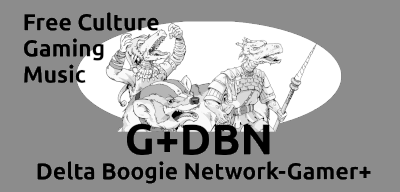
DJ Hairy Larry Presents Jay Shepherd Playing All Blues

Jay Shepherd Live At The Delta Jazz Workshop


Posted on 2026-01-25

DJ Hairy Larry Presents Jay Shepherd Playing All Blues
From The Archives Of Something Blue 2026-01-25


https://sbblues.com/2026/01/25/dj-hairy-larry-presents-jay-shepherd-playing-all-blues/

Thanks Marty. Today we’re going to hear a Miles Davis song recorded right here at ASU at the Delta Jazz Workshop.

“All Blues” was written by Miles Davis and was first released in 1959 on the most popular jazz album of all time, “Kind Of Blue”. “All Blues” is a blues with it’s own sound, in 6/8 instead of 4/4, and using all 7th chords with an off chord at the turnaround. Jazz musicians love to improvise on “All Blues”. It’s so familiar and so interesting.

On July 12, 2016, Jay Shepherd played “All Blues” in the ASU Fine Arts Recital Hall as part of the jazz department’s Delta Jazz Workshop. Featured on piano on this song we will hear Jay’s partner in crime, Shane Chastain.

Now, Shane and Jay are back together again in a new band, Silver Wings, and I hope to record them again for Something Blue.

In December, 2025, I released this concert as a live album, “Jay Shepherd Live At The Delta Jazz Workshop”. It’s great, all the way through. I’ll post a link to it on the Something Blue website at sbblues.com.

Click for more pictures

Home - Table Of Contents - Most Recent - RSS - Permalink - Text

MixRemix Radio - Creative Commons Jazz - 2026-01-23

NJHB-Cricular Logic


Posted on 2026-01-23

MixRemix Radio - Creative Commons Jazz - 2026-01-23

https://archive.org/details/ccj2026-01-23

jazz.mixremix.cc

Kai Engel - Paradigm Lost by Kai Engel
https://archive.org/details/SCL145

NJHB-Circular Logic
https://archive.org/details/hl2012-12-29

Stefan Kartenberg-Piano Soundtracks
https://www.jamendo.com/album/458832/piano-soundtracks

The Jazz Jousters Sessions #2 by SmokedBeat
https://smokedbeat.bandcamp.com/album/the-jazz-jousters-sessions-2-2

Up - Paolo Pavan - Pasqualino Ubaldini
https://www.jamendo.com/album/122955/up

Gray the flutesmith-solo 99 idea
https://www.jamendo.com/album/497400/solo-99-idea
CC BY-NC-ND

#jazz #blues #CreativeCommons

Click for more pictures

Home - Table Of Contents - Most Recent - RSS - Permalink - Text

Hairy Larry On G+DBN Mastodon
Home - Table Of Contents - Most Recent - RSS
Gamer+ Tumblr
Home - Table Of Contents - Most Recent - RSS
Related To Geeks Tumblr
Home - Table Of Contents - Most Recent - RSS
Powered By Plain Text Blog